What Handling Fees Mean for Ecommerce Shipping
Shipping Costs & Rates
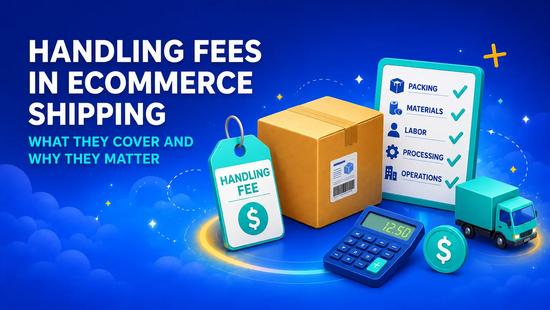
Shipping cost rarely ends with the carrier label. Before a parcel reaches the carrier, the order still has to be picked, checked, packed, protected, labeled, and staged for pickup. Those steps consume labor, supplies, and warehouse time. For many ecommerce brands, part of that cost is recovered through a handling fee.
A handling fee is actually simple. The decision behind it is not. A handling fee affects margin, checkout presentation, shipping strategy, and customer perception all at once. Stores with fragile products, oversized packaging, subscription orders, custom bundles, or lower average order values usually feel that pressure earlier because their fulfillment cost can rise faster than the label price alone suggests.
What Is a Handling Fee
A handling fee is an additional charge to cover the cost of preparing an order for shipment. In ecommerce, that commonly includes picking, packing, packaging materials, labeling, and related fulfillment work that happens before the carrier takes possession of the parcel. Platforms that support calculated shipping rates often allow merchants to add this cost as a fixed amount or percentage adjustment, which reflects how common the fee has become in real shipping operations.
Handling Fee Meaning
A handling fee is not the same as carrier postage. It is not a fuel surcharge. It is not a delivery-zone adjustment. It falls on the merchant side of the shipping process and reflects the cost of preparing the order for shipment.
A handling fee usually covers labor, packaging materials, and the work required to prepare an order for shipment. Cartons, mailers, void fill, tape, inserts, labor time, workstation supplies, and order verification all contribute to the true cost of shipping an order. The mix varies by catalog and packaging method, yet the logic remains consistent: the fee exists to recover fulfillment expenses that are separate from transportation.
Shipping and Handling Fees Are Separate Cost Layers
Customers often see one line labeled "shipping," one labeled "shipping and handling," or a single blended delivery amount at checkout. The accounting behind those labels can vary, but the underlying cost layers are still different.
Shipping is the transportation charge linked to carrier service, package details, destination, and delivery speed. Handling is the merchant-side cost tied to preparing the order. When those two are blended together, the checkout page may look cleaner. The internal cost model still needs to separate them if the business wants reliable pricing decisions. Shopify’s rate settings reflect this distinction by letting merchants add a handling fee to carrier-calculated rates and apply flat or percentage adjustments.
This distinction becomes more important as catalogs grow more complex. A single T-shirt in a mailer and a fragile gift set in a branded carton may ship via the same carrier, yet their fulfillment processes are completely different. Treating both orders as if they carry the same internal shipping cost makes checkout pricing less accurate and the margin harder to protect.
What Usually Belongs Inside a Handling Fee
Labor is usually the first component. Picking the order, confirming the contents, packing it correctly, applying the label, and moving it into the outbound queue all take time. Stores with manual workflows, kitting steps, or product-level packaging rules often see this cost very clearly.
Packaging materials are next. Boxes, poly mailers, tape, labels, inserts, protective fill, cold-chain materials, and branded packaging all add expense before the carrier enters the picture. Once products become fragile, bulky, oddly shaped, or presentation-sensitive, those material costs can rise quickly.
Overhead also belongs in the conversation. Printer supplies, packing stations, software, warehouse equipment, and the general operating cost of running fulfillment all influence per-order handling cost. Some brands track that precisely. Others fold it loosely into broader operational budgets. Either way, the cost is real, and it often explains why carrier postage alone does not cover the full shipping expense of the order.
When a Handling Fee Protects Margin
A handling fee works best when order-level fulfillment cost varies enough that postage alone would understate the real cost of shipping the order.
Fragile products are a common example. Glass, candles, cosmetics, electronics accessories, and gift-ready kits often require more protective material and more packing time than basic replenishment items. A low visible shipping charge may look attractive at checkout while quietly eroding margin on every shipment.
Lower-priced orders can create the same problem. A merchant selling inexpensive, lightweight items may spend a meaningful share of the order value on pick-and-pack labor and packaging supplies. In those cases, a handling fee can support a healthier pricing model.
Bulky or special-case products can also justify one. Google Merchant Center allows product-level shipping overrides for items with different shipping requirements, including bulky or fragile products. That reflects a broader operational reality: some orders need their own shipping logic because the fulfillment burden is materially different from the rest of the catalog.
Where Handling Fees Create Checkout Friction
The fee becomes risky when the shopper encounters it late, sees it stacked oddly, or cannot connect it to the order.
Extra costs remain one of the biggest reasons customers leave checkout. Baymard’s current cart-abandonment summary shows that extra costs such as shipping, tax, and fees are a leading driver of abandonment among shoppers who were seriously considering the purchase.
A handling fee can compound the problem when the shipping setup is weak. One common issue is inaccurate package data. If calculated shipping rates are already off, then adding an extra charge on top of them widens the disconnect between what the order appears to cost and what the customer is being asked to pay. Shopify’s shipping guidance makes clear that carrier-calculated rates depend on accurate product weight and package dimensions.
Another issue is fee stacking. Shipping profiles, product-specific overrides, split-origin setups, and layered rules can compound charges in ways the merchant did not intend. Once the cart becomes complex, the final shipping amount can rise faster than the customer expects. A fee that looked modest on paper can start damaging conversion when it interacts poorly with the rest of the shipping setup.
How to Structure Shipping And Handling Fees More Cleanly
Most stores use one of four approaches.
The first is a flat per-order handling fee. This is simple, stable, and easy to forecast. It works best when order complexity stays relatively consistent.
The second is a percentage markup on calculated shipping rates. Many platforms support this method directly. It can track order cost more closely than a flat fee, though it needs close review on expensive shipments where the markup may rise too far.
The third is a product- or profile-based fee. This is useful when certain items require special packaging, more labor, or a distinct shipping process. Bulky, fragile, perishable, or presentation-heavy products often fit this model better than a universal fee.
The fourth is to hide the handling cost inside product pricing or a broader shipping strategy. Some brands absorb it into margins, minimum-order thresholds, or free-shipping math. That can produce a cleaner checkout page, though it only works when the catalog economics can support it.
A stronger choice depends on the order mix. The wrong structure usually shows up fast. Margins shrink on difficult orders, shipping costs look inconsistent across the catalog, and customer reactions at checkout get worse, not better.
A Better Checkout Approach for Carrier-Based Stores
Merchants using carrier-based pricing need a shipping setup that accurately reflects the order before the customer clicks buy.
That usually starts with accurate product weights, package dimensions, and shipping profiles. Then comes the presentation layer. If the checkout price already reflects the order well, the merchant has more flexibility in how to recover handling costs. A flat fee may be enough. In other cases, folding part of the handling expense into product price or service-level pricing can produce a cleaner result.
For brands using real-time shipping rates, the goal is to keep the checkout charge aligned with the actual shipment profile instead of relying on broad estimates. That creates a better base for any handling-fee decision because the shipping side of the equation is already more precise.
At Shipduo, we view handling fees as part of the wider pricing model. They work best when they support operational reality instead of compensating for weak shipping setup. Accurate shipment data, clean carrier comparisons, and a credible checkout presentation give merchants far more control over how those fees affect both margin and conversion.
Common Mistakes That Distort The Fee
One mistake is using a handling fee to cover every shipping problem at once. If the real issue is poor packaging data, weak carton logic, or limited carrier comparison, the fee becomes a patch instead of a strategy.
Another is setting the fee once and leaving it unchanged for too long. Packaging cost changes. Carrier pricing changes. Product mix changes. A fee that made sense last year can become too low or too aggressive over time.
The third is ignoring order segmentation. A store with fragile gift sets, bulky accessories, and basic replenishment items may need more than one internal cost model. Forcing every order through the same fee logic usually produces weak pricing on one end of the catalog or the other.
In Conclusion
Handling fees are part of the real economics of ecommerce fulfillment. Carrier postage is only one layer of shipping cost. Labor, packaging materials, order complexity, and operating expense all shape what it takes to move an order out the door.
The stronger approach is deliberate. Separate transportation cost from fulfillment cost. Measure both. Choose a fee structure that fits the catalog. Test how it appears at checkout. Review it as the business changes.
A fee that reflects actual operational work can protect margin and support cleaner pricing. A fee that exists only to patch a poor setup usually creates friction where the customer feels it most.