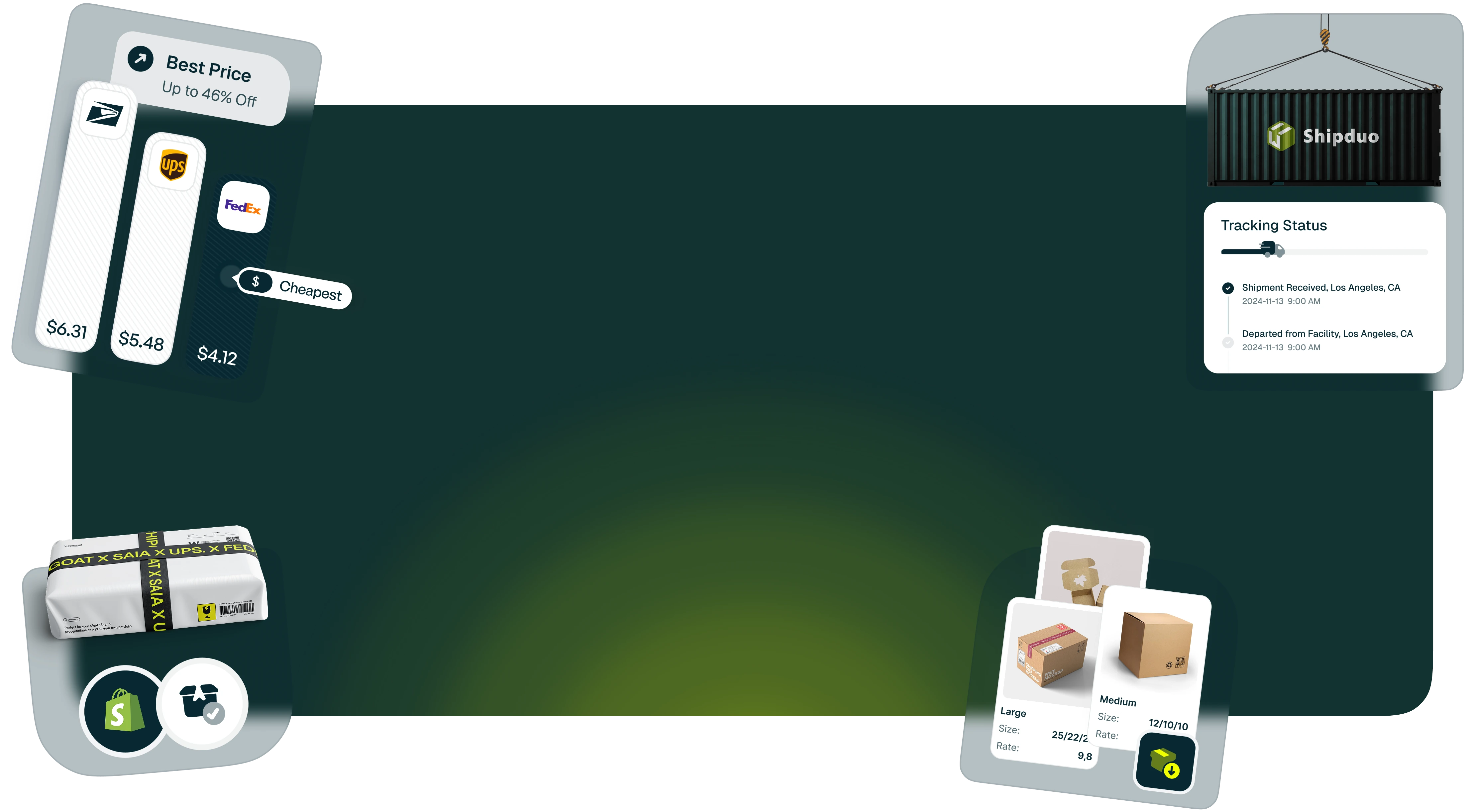
Shipduo’s multi-origin shipping platform helps ecommerce teams manage orders that can ship from multiple warehouses, fulfillment centers, stores, 3PLs, or supplier locations. Instead of treating every order as if it ships from a single fixed point, Shipduo connects ship-from logic with rates, labels, carriers, parcel workflows, LTL freight, and shipment tracking.
For teams shipping from multiple warehouses, this provides a cleaner way to match each order to the correct origin, service, and fulfillment process.
Multi-Origin Shipping for Modern Fulfillment
Multi-origin shipping is useful when inventory is in multiple locations. An order may need to ship from the closest warehouse, a specific fulfillment center, a 3PL location, or the origin that has the right product in stock.
Shipduo helps teams keep origin data connected to the shipping workflow, including product details, weight, dimensions, carrier services, freight rules, delivery destination, and shipment status.
This makes fulfillment easier for ecommerce teams that manage multiple locations, mixed product types, and growing order volume.
Origin-Based Shipping Rates
Shipping costs can change based on the origin. A parcel sent from a nearby warehouse may cost less than the same parcel shipped from another region. A bulky item may need freight from one location, while a smaller item may move through a parcel carrier from another.
Shipduo helps support origin-based shipping rates by connecting shipping logic with the details that affect cost:
- Ship-from location
- Delivery address
- Product weight and dimensions
- Package type
- Carrier service
- Parcel or LTL freight requirements
- Fulfillment rules
This helps teams give customers clearer shipping costs while reducing manual rate checks before dispatch. For customer-facing pricing, Shipduo can connect origin logic to checkout shipping rates so that rates more accurately reflect the ship-from location, destination, product data, and shipping rules.
Multi-Warehouse Shipping Platform for Parcel and Freight
A multi-warehouse shipping platform should help teams manage more than origin selection. Ecommerce operations also need rate access, label creation, service rules, carrier selection, tracking, and freight handling in one connected process.
Shipduo supports parcel workflows and freight shipping, making it useful for teams that ship lightweight orders, oversized products, wholesale shipments, palletized goods, or mixed parcel and LTL orders.
With Shipduo, teams can manage small-parcel shipping with better context on the order, origin, carrier, and delivery destination.
Shipping from Multiple Warehouses with Less Manual Work
Shipping from multiple warehouses can create extra work when teams rely on spreadsheets, carrier portals, or manual origin decisions. Shipduo helps reduce that friction by keeping order and shipment data connected.
Teams can use Shipduo to:
- Route orders based on ship-from logic
- Review parcel and freight options
- Create labels from connected order data
- Apply carrier and service rules
- Track shipments after dispatch
- Keep shipment records tied to each order
This helps fulfillment teams move faster without losing control over rate accuracy, origin logic, or delivery visibility.
Multi-Origin Shipping Solution for Growing Ecommerce Teams
Shipduo gives teams a multi-origin shipping solution that supports practical fulfillment needs across multiple order sources, carriers, warehouses, and shipping methods.
It works well for businesses that:
- Store inventory in multiple locations
- Use one or more 3PL partners
- Ship from regional warehouses
- Manage parcel and freight orders
- Need better checkout rate accuracy
- Want fewer manual shipping decisions
- Need tracking connected to each order
As order volume grows, Shipduo helps teams support high-volume ecommerce shipping with organized rates, origin logic, labels, carrier workflows, and shipment tracking.
How Multi-Origin Shipping Works in Shipduo
Connect order and origin dataUse order details, product data, destination information, and ship-from location details inside the shipping workflow.
Apply shipping rulesUse advanced shipping rules to match orders with the right carrier, service, origin, parcel workflow, or freight process based on shipment requirements.
Review rates and servicesCompare available shipping options using the origin, destination, package details, and carrier rules.
Create labels and shipment recordsGenerate labels with connected order data to reduce repeated entry and improve accuracy.
Track delivery progressKeep shipment tracking tied to the order so fulfillment and support teams can follow delivery status, delays, and exceptions.