Shipping Manifest: What It Is, When You Need It, and How Teams Use It
Fulfillment Operations & Documentation
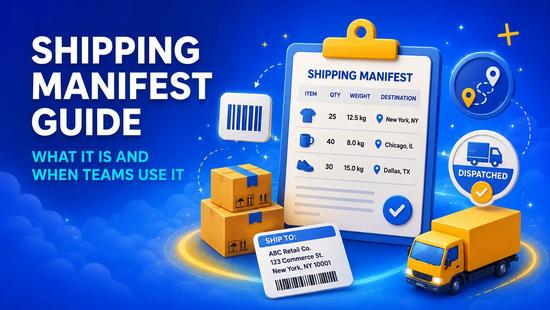
Shipping gets messy fast when order volume rises. A few labels are easy to manage by hand. Fifty, one hundred, or five hundred outbound packages in a day require much tighter control. That is where a shipping manifest becomes useful. For teams handling bulk label printing, the manifest creates a cleaner handoff between the warehouse and the carrier.
That control matters because shipping is more than printing labels and loading carts. Teams need a reliable record of what left the building, which packages were included in the carrier handoff, and how the day’s shipments were grouped. A strong manifest process helps reduce missed scans, keeps dispatch organized, and gives operations teams a clearer view of outbound activity. That level of visibility also supports downstream workflows tied to shipment status, including ABF delivery tracking.
What Is a Shipping Manifest?
A shipping manifest is a document or digital record that lists the shipments included in a batch being handed off to a carrier. It serves as a consolidated shipping record for the packages prepared during a specific period, usually the same day.
A manifest for shipping often includes shipment identifiers, tracking numbers, package counts, service details, and shipment dates. In many warehouse workflows, it acts as the final checkpoint before pickup or drop-off. Once the manifest is created, the team can verify that the packages staged for carrier handoff match the packages that were actually labeled and processed.
This matters because shipment volume creates room for mistakes. A warehouse may print hundreds of labels in a shift. Without a structured closeout step, it becomes easier for parcels to be missed, left behind, or handed off without a clear acceptance trail. A manifest helps turn a stack of individual shipments into one organized outbound batch.
Manifest Shipping Definition in Day-to-Day Operations
The manifest shipping definition becomes more useful when viewed through real warehouse work rather than formal terminology. In day-to-day operations, a shipping manifest is the batch record that connects order processing, label creation, and carrier handoff.
That connection helps several teams at once. Warehouse staff use it to confirm outbound volume. Shipping managers use it to close the day’s shipment activity. Support teams may rely on it when tracking questions come in, and a package appears to be labeled but not yet accepted. Operations leads use it to spot process gaps when packages are missing from pickup or tracking visibility is delayed.
In practical terms, the manifest is part control tool, part accountability record. It tells the team which shipments were grouped together, when they were prepared, and what should have moved out the door in that pickup cycle.
How a Manifest for Shipping Fits Into the Workflow
Most shipping teams do not build the day around the manifest itself. The manifest shows up near the end of the shipping flow, after orders are picked, packed, and labeled. That timing is important because the manifest works best as a closeout layer, not as a replacement for normal shipping steps.
A common workflow looks like this: orders are imported, labels are generated, packages are packed, and outbound cartons are staged by carrier or service level. Once that batch is ready, the team generates a manifest for shipping that reflects the packages included in that handoff. The carrier then scans the manifest or otherwise processes the batch as accepted.
That process helps in two ways. First, it reduces the need to handle every package as a separate acceptance event in high-volume workflows. Second, it creates a cleaner shipment record for the team. When a carrier pickup is complete, there is a defined batch tied to that handoff instead of a loose collection of boxes and labels.
Why Shipping Teams Use Manifests
Teams use manifests because shipping errors become more expensive as order counts rise. A missed package, a missing acceptance event, or an unclear pickup record can quickly turn into support tickets, replacement orders, and internal confusion.
A manifest helps reduce that friction by making the outbound batch easier to verify. It gives the team a structured record of what was supposed to leave, which helps when reconciling shipping activity later. If a package does not receive tracking movement as expected, the team has a better starting point for investigation.
Manifests also support speed at handoff. When shipments are organized in batches, pickup becomes easier to manage. The carrier receives a grouped outbound record, and the warehouse has a clearer way to confirm that the day’s packages were tendered properly.
This becomes even more useful when several shipping stations or users are generating labels throughout the day. A manifest creates a final layer of order in an environment where many labels may have been created across multiple workstations, shifts, or packing zones.
Manifest Delivery and What It Means
Manifest delivery can cause confusion because the phrase sounds like a delivery service level. In practice, it is tied more closely to shipment status and carrier handoff than to final delivery timing.
When a package is marked in a manifest-related status, it often means the shipment information has been created and grouped for carrier processing, or that the package is associated with a batch handed off for acceptance. That does not always mean the parcel is already moving through the full transportation network. It means the shipment is now attached to a documented outbound batch.
This distinction matters for customer support and warehouse teams. A label may exist. A tracking number may exist. The package may even be listed in the manifest. Still, the shipment may not yet show full movement until the carrier completes the next scan or processing step. Teams that know this difference can respond to shipment questions with more accuracy and less confusion.
When You Actually Need a Shipping Manifest
Not every shipper needs a formal manifest every day. A very small operation dropping off a handful of packages may be able to work without one. Once shipping volume starts rising, the value becomes much clearer.
A manifest becomes especially useful when a team is processing many labels in one day, handing off multiple packages to the same carrier, managing pickups instead of individual counter scans, or trying to create a stronger acceptance trail. It is also helpful when several warehouse users are generating shipments across different stations and the business needs one final batch-level record to close the day.
The need gets stronger when order volume spikes during promotions, seasonal peaks, or subscription renewals. In those periods, individual parcel handling becomes slower and more error-prone. A manifest helps the team group the outbound workload into something easier to verify and hand off.
What Information a Shipping Manifest Usually Includes
A shipping manifest can vary by carrier and platform, but most versions include the same core details. The goal is to show what belongs in the outbound batch and provide enough information to confirm the handoff.
Typical manifest details include shipment date, tracking numbers, number of packages, service type, shipper information, and sometimes total counts or summary data tied to the batch. In digital workflows, the manifest may exist as a system-generated closeout record rather than a paper document, but the function stays the same.
The most useful manifests are easy to reconcile. A warehouse lead should be able to compare the manifest against staged packages and quickly spot any mismatch. If the team expects 126 packages in the batch and only 124 are on the dock, the manifest helps catch that gap before pickup is complete.
How Manifests Help Tracking and Carrier Acceptance
A shipping manifest helps create a cleaner handoff between the warehouse and the carrier. When multiple packages leave in the same batch, the manifest gives the team a single outbound record tied to that handoff. That makes it easier to confirm that the packages prepared for dispatch were actually included in the pickup or drop-off.
This matters because tracking gaps often start at the handoff stage. A label may be created, but the shipment can still look inactive until the carrier processes the package. When batches are organized properly and closed out with a manifest, the path from label creation to carrier acceptance is easier to manage and easier to verify.
That structure also helps support teams. If a customer checks tracking too soon and sees limited movement, the operations team has a clearer internal record showing that the shipment was part of a completed outbound batch. That reduces confusion, shortens investigation time, and makes post-dispatch issues easier to resolve.
A manifest does not eliminate every tracking delay, but it does give the shipping team stronger control over one of the most important parts of the process: proving what left the warehouse and when the carrier took possession of it.
Common Problems a Shipping Manifest Helps Prevent
The most common issue is the labeled-but-not-handed-off package. This happens when a shipment record exists in the system, but the actual carton never makes it into the carrier's handoff. That gap is easier to catch when the team compares staged packages against the manifest before pickup.
Another issue is the unclear acceptance trail. When dozens or hundreds of packages move at once, it becomes harder to confirm what the carrier actually received unless there is a clear batch-level record. A manifest helps strengthen that record.
It also reduces confusion across teams. Shipping staff, support teams, and operations managers all benefit from having one shared outbound reference. When questions come up later, the team has a clearer operational record instead of relying on guesswork or isolated label history.
How Teams Use Manifests More Effectively
The best results usually come from treating the manifest as a standard closeout step instead of an optional extra. Once the packing wave is complete, the team should verify staged cartons, generate the manifest, confirm counts, and complete the carrier handoff in that order.
It also helps to group packages by carrier and service level before manifesting them. That keeps pickups cleaner and makes batch reconciliation easier. Teams shipping from multiple stations should align cutoffs and closeout timing so that the manifest reflects a complete and accurate outbound batch.
The goal is simple: every shipment that appears on the manifest should be physically ready for handoff, and every package in the handoff should belong on the manifest. That level of discipline reduces exceptions and makes shipping performance easier to trust.
Conclusion
A shipping manifest gives growing teams a cleaner way to manage outbound volume, confirm handoff, and support better shipment visibility after packages leave the warehouse. It adds structure at the point where shipping workflows often become messy: the final transition from label creation to carrier acceptance.
For low-volume shippers, a manifest may feel optional. For teams moving large daily batches, it becomes part of the control system. It helps match package counts to pickup activity, supports cleaner acceptance records, and gives operations teams a stronger handle on what actually left the building.