Proof of Delivery (POD): What Counts and Why It Matters
Delivery Accuracy & Tracking
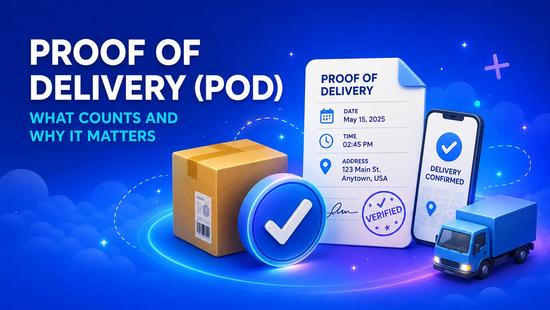
A package can show as delivered and still create a problem. The customer may say nothing arrived. The parcel may have been left in the wrong place. Support may have a tracking update, but no strong record of who received the shipment or where it was left. That gap is where POD becomes important. For teams using branded tracking, POD adds a stronger layer of confirmation when delivery questions come in.
In shipping operations, proof matters after the truck leaves. It helps support teams respond faster, gives merchants a clearer record of completed delivery, and strengthens the case when a dispute turns into a claim or chargeback. A delivery scan alone is useful. A fuller record is stronger.
What Is POD in Shipping?
POD stands for proof of delivery. It is the record used to show that a shipment reached its destination and was handed off, dropped off, or signed for in a documented way. That record can include delivery date, delivery time, recipient information, tracking number, signature details, and, in some cases, a photo tied to the delivery event.
That definition matters because “delivered” and “proved delivered” are not always the same thing in day-to-day operations. A standard tracking event may show that the carrier marked the shipment as delivered. POD goes a step further by giving the seller more details tied to that status. The stronger the detail, the easier it is to answer customer questions, investigate delivery issues, and support claims handling.
POD Meaning in Business
POD meaning in business goes beyond shipping terminology. It is part of accountability. A business needs a clear record showing when goods changed hands, who received them, or what evidence supports the completed delivery. In ecommerce, that record supports post-purchase service. In wholesale, B2B shipping, and freight workflows, it can also affect invoicing, payment timing, internal reconciliation, and dispute handling.
That is why POD has value outside the warehouse. Customer support teams use it when delivery claims come in. Finance teams may rely on it when disputes affect payment. Operations teams use it to review carrier performance and identify repeated delivery issues. Without a solid proof trail, every “where is my order” case takes longer to resolve.
What Counts as Proof of Delivery?
Proof of delivery is strongest when it ties the shipment to a clear delivery event. A valid POD record often includes the tracking number, delivery timestamp, destination information, and evidence of receipt. Depending on the service and carrier, that evidence may include a recipient name, a signature image, a delivery photo, or a formal POD letter delivered after the shipment is completed. USPS describes POD as an emailed response letter containing delivery information, the recipient’s name, the tracking number, and an image of the signature when available.
Not every order needs the exact same level of proof. A low-risk residential shipment may rely on a delivered scan plus photo confirmation if the service supports it. A higher-risk shipment may call for signature capture. A restricted or high-value delivery may need a more formal record tied to the recipient. The more valuable or dispute-prone the shipment, the more important it becomes to use a delivery method that creates stronger proof.
Electronic Proof of Delivery and Why It Has Become Standard
Electronic proof of delivery is now the normal format in many shipping workflows. Instead of relying on paper handoffs and manual filing, the delivery record is stored digitally and tied to the tracking history. That can include delivery time, geolocation-linked scan activity, a recipient name, signature data, and image-based confirmation depending on the service used. Carrier tools now commonly surface POD through tracking pages, emailed records, dashboards, or PDF delivery records.
This shift matters because electronic proof of delivery is easier to access, easier to search, and easier to share across teams. Support can pull it when a customer opens a ticket. Operations can review it during a delivery dispute. Finance can use it when a chargeback needs a stronger response. Digital access cuts down on the lag that used to come with paper delivery records and manual follow-up.
Why POD Matters So Much in Ecommerce
Delivery disputes are expensive even when the package value is modest. A single issue can trigger support time, a replacement order, a refund review, and a claim investigation. POD helps shorten that cycle because it gives the team something more concrete than a vague delivery status.
It is also one of the clearest ways to separate shipment movement from actual handoff evidence. A tracking page may show that the order was delivered at 2:17 p.m. POD adds context that can help answer the next question. Was it signed for? Was it left at the address? Is there a photo? Is the recipient identified? Those details make a big difference when the customer says the parcel never arrived.
For merchants, that can affect much more than one support case. Stronger delivery records can help reduce false “item not received” complaints, support claim documentation, and improve internal confidence when reviewing carrier issues. When order volume rises, operational clarity has real value.
Delivered Status vs. Strong POD
A delivered scan is often the first piece of proof, but it is not always enough on its own. In many cases, it only confirms that a carrier marked the package as delivered in the system. It may not identify the recipient. It may not show where the parcel was left. It may not include a signature or image.
A stronger POD record adds more substance. Signature services can confirm receipt by a person at the address. Delivery photo tools can show where the parcel was left for qualifying residential shipments. Formal proof letters can provide a record that support teams can save, review, or send when the customer needs more details.
The right level of proof depends on the shipment. High-value goods, replacement orders, fraud-sensitive products, and business deliveries usually need stronger confirmation than routine low-risk parcels.
When to Use Signature-Based POD
Signature-based POD makes more sense when the shipment has a higher financial or service risk. That includes expensive orders, regulated products, replacement shipments, and orders going to locations where package theft or delivery disputes happen more often.
Signature capture creates a more defensible record because it connects the delivery to a person rather than only a status update. USPS Signature Confirmation provides delivery information, including the date and time delivered or delivery attempt, and it allows access to proof of delivery records through tracking. USPS also maintains delivery records with signature details for certain insured and signature-linked services.
That does not mean every parcel should require a signature. Signature requirements can increase cost, add friction for residential customers, and sometimes delay delivery if no one is available. The better approach is to reserve stronger proof levels for shipments where the extra protection clearly supports the order value or risk profile.
What POD Helps Prevent
POD does not prevent every delivery issue, but it does help reduce confusion after the fact. It helps teams handle “delivered but not received” complaints more cleanly. It strengthens the record when customers dispute the receipt. It provides a faster path to review the delivery event. It also helps operations separate true carrier failures from cases where the parcel reached the address, but the handoff details need review.
In some cases, POD also supports claims and fraud review. A shipment with a signature image, recipient name, delivery time, and linked tracking history is easier to investigate than a shipment with only a basic delivered scan. The stronger the proof chain, the easier it becomes to make consistent decisions across support, finance, and shipping teams.
How Teams Use POD More Effectively
The strongest shipping teams do not treat POD as a last-minute afterthought. They decide in advance which shipments need stronger proof and build those rules into the shipping flow. High-value orders may require a signature service. Certain product categories may need extra delivery confirmation. Some destinations may justify photo-based proof when available.
It also helps to keep delivery records easy to retrieve. A support team should not have to hunt across systems to answer a delivery question. Tracking, service type, and POD access should be organized so the team can check the shipment history quickly and respond with confidence.
Clear customer communication matters too. When delivery confirmation is available, customers should know what kind of handoff record exists. That creates better expectations and can reduce confusion when a package is left at a door, front desk, mailroom, or reception point.
In Conclusion
Proof of delivery gives shipping teams a stronger record of what happened after a package left the network and reached the destination. That record can be simple or detailed, depending on the service used. The key is that it adds evidence to the delivery event.
For ecommerce brands, POD matters because delivery disputes are rarely solved by guesswork. They are solved by records. A clear POD strategy helps support teams respond faster, helps operations review issues with more confidence, and gives the business a better way to handle claims, chargebacks, and customer questions when delivery becomes the issue.