Joint Shipment / Split Orders: When Combining Shipments Lowers Cost
Fulfillment Operations & Documentation
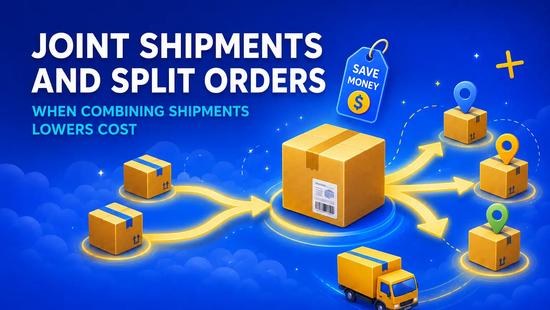
Shipping costs often rise one small decision at a time. An order gets split across warehouses. A second parcel goes out a day later. Two boxes travel to the same address under separate charges. None of those moves looks expensive on its own, but over time, they can put steady pressure on the margin. For teams using a high-volume shipping platform, that is where joint shipment planning starts to matter.
Combining shipments can lower costs, cut duplicate handling, and make outbound flow easier to manage. It can also create new problems if the order is delayed waiting for inventory, packed badly, or grouped in a way that complicates tracking. The real goal is not to combine everything. The goal is to know when a combined shipment improves the order economics and when split orders are the better call.
Joint Shipment Meaning in Ecommerce
Joint shipment meaning can vary by company, carrier, or shipping system, but in ecommerce it usually refers to combining items, cartons, or order lines into one coordinated outbound shipment instead of sending them separately. In some operations, that means one box. In others, it means a multiple-piece shipment where several packages move together under one shipment record.
The reason teams use this approach is simple. Shipping two related packages separately often adds duplicate cost. There may be two labels, two handoff events, two zone-based charges, and more labor tied to packing and support. When the items can travel together without creating a service problem, a joint shipment can be the cleaner and cheaper option.
This matters most in operations where the same customer order can leave the warehouse in more than one way. A store may have products stored in different zones, packed in different cartons, or released at different times. Once those decisions start branching out, the shipping bill usually follows.
What Is a Joint Shipment?
Joint shipment is a shipment strategy where related goods are grouped into one outbound movement when doing so improves cost, handling efficiency, or delivery coordination. That may mean one parcel containing many items. It may mean a multiple-piece shipment with several boxes tied to the same order and destination. It may also mean holding part of an order briefly so the full shipment can leave together instead of in fragments.
That does not make joint shipment a universal rule. Some items should never be forced into the same parcel. Fragile goods may need separate packaging. Oversized products may need their own handling. Time-sensitive items may need to be shipped immediately rather than waiting for the rest of the order.
The best way to think about a joint shipment is as a controlled consolidation decision. It works when the combined movement lowers costs or simplifies order flow without compromising the delivery experience.
Why Combining Shipments Can Lower Cost
The biggest savings usually come from reducing duplicate parcel activity. Every extra shipment can add a label charge, separate pick and pack time, extra packaging, and another billed movement through the carrier network. If two shipments are going to the same address and can safely move together, sending them as one outbound order often lowers the total shipping cost.
Distance makes the decision even more important. The farther a package travels, the more expensive duplicate shipments tend to become. A joint shipment can protect margin by turning two chargeable movements into one coordinated movement. The labor savings matter too. Fewer separate parcels usually means less time spent printing labels, staging cartons, reconciling tracking events, and handling shipment questions later.
Packaging discipline plays a role here as well. A combined shipment only helps when the carton choice is smart. If two items are forced into a box that triggers higher-dimensional pricing, the expected savings can disappear quickly.
When Split Orders Are the Better Choice
There are clear cases where split orders make more sense. If one item is in stock and another will not arrive for several days, holding the full order may create more damage than the shipping savings are worth. Delayed delivery can lead to support tickets, cancellations, and a weaker customer experience.
Split orders can also be the right choice when inventory is spread across more than one fulfillment location. Pulling all items to one point for a joint shipment may add transfer time, extra handling, or internal shipping cost that offsets the benefit. In some cases, the cheapest path is sending each item from the facility where it already sits.
Product type matters too. Hazard rules, temperature sensitivity, fragile packaging, and oversized items can all make a combined shipment a poor fit. The same applies to gift orders, replacement orders, or subscriptions where timing matters more than pure shipping efficiency.
Joint Shipment Tracking and Customer Visibility
Joint shipment tracking becomes more important as soon as an order starts moving in multiple packages or under a single grouped shipment record. Customers care less about the internal shipping logic than about one simple question: where is my order?
That is where combined shipments can create both advantages and complications. A well-managed joint shipment can reduce the number of tracking threads attached to one order. That makes the post-purchase experience easier to follow. A poorly managed one can create confusion if one box moves ahead of another, if the order has several package IDs, or if the customer sees only part of the shipment activity at first.
Operations teams need a clear tracking structure before they start combining shipments more aggressively. Each package should be tied to the right order. Customer notifications should reflect the actual shipment structure. Support teams should be able to tell, in seconds, if the order is left in one parcel, several linked parcels, or separate split shipments.
This is especially important in multiple-piece shipments. Once several cartons are tied to one order, tracking logic needs to remain clean from label creation through delivery. If that structure breaks down, the savings from consolidation can be erased by post-purchase confusion.
How Teams Decide Between Joint Shipment and Split Fulfillment
The strongest decision framework starts with four questions.
First, are all items ready to leave within an acceptable timeframe? If yes, a joint shipment becomes more attractive. If no, the delay cost may outweigh the shipping savings.
Second, can the items be packed together safely and efficiently? If the answer is no, split fulfillment is often the better move.
Third, what happens to the total cost if the order is combined? That means looking at packaging, billed weight, dimensional exposure, destination, and extra labor. A joint shipment should create a real cost improvement, not a guessed one.
Fourth, what happens to the customer promise? If combining the orders creates a cleaner delivery experience, that is a plus. If it creates a longer wait or more confusing tracking, the shipping team may be solving the wrong problem.
The best teams use rules instead of one-off judgment calls. They define when orders should be held briefly for consolidation, when they should be released immediately, and which product combinations should never be forced into the same shipment.
The Role of Cartonization and Order Profile
Cost control depends heavily on cartonization. Two orders with the same items can produce very different shipping outcomes depending on how they are packed. A joint shipment works best when the combined parcel stays dense, stable, and reasonably sized for the carrier network.
That is why order profile matters more than theory. Heavy compact items can benefit from consolidation. Bulky lightweight items may not. Mixed orders with odd shapes may need separate cartons even if they share the same address.
A team that wants better results from joint shipment planning should review the actual order history. Look at order composition, parcel dimensions, zone spread, and claims tied to damaged packages. The answer usually appears in the data quickly. Some product groups are natural candidates for consolidation. Others look cheaper when combined, then quietly lose money through dimensional pricing or damage.
International Orders and Customs Considerations
Cross-border orders need extra care. Combining shipments can reduce transport costs in some international flows, and it may simplify the number of separate parcels moving to the same destination. At the same time, customs treatment, documentation, product classification, and shipment contents can limit how far consolidation should go.
That is one reason combined international movements should follow clear shipment rules. Products with different documentation needs may not belong in the same grouped shipment. Package content should align with the customs data attached to the outbound movement. Once several parcels are tied together, missing details can create clearance problems that are much more expensive than the shipping savings.
International consolidation can work well, but only when packaging, documentation, and shipment structure all stay aligned.
Where Joint Shipment Fits in a Stronger Shipping Operation
Joint shipment planning works best inside a broader shipping system that already has good order visibility, clear packaging rules, and service-level discipline. Without that structure, combining shipments can turn into manual guesswork.
Teams need to know where inventory is, which items are ready, how the order should be packed, and what the customer was promised at checkout. They also need a clean way to label, track, and support combined shipments after dispatch. When those parts are in place, joint shipment becomes a practical way to lower cost on the right orders without creating friction later.
This is where shipping operations usually improve meaningfully. Instead of treating every order the same, the team starts matching the outbound method to the actual order profile. Some orders should ship together. Some should split. The value comes from making that choice deliberately.
Final Thoughts
Joint shipment can lower cost when related items are ready at the same time, pack well together, and move to the same destination without creating delivery problems. It reduces duplicate shipping activity, cuts avoidable handling, and can simplify outbound flow when the order profile supports it.
Split orders still have an important place. They protect delivery speed when inventory is scattered, timing is critical, or product requirements make combined shipping a poor fit. The strongest shipping strategy uses both models with clear rules behind them.
Cost savings come from the fit between the order and the shipment structure. When that fit is right, combining shipments can be a smart operational win.