LTL Freight Pickup Checklist for Ecommerce Teams: BOL, Labels, Dimensions, and Accessorials
Fulfillment Operations & Documentation
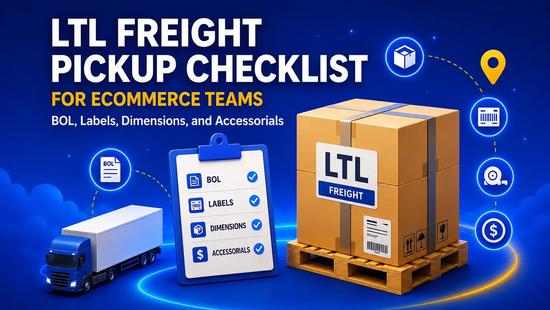
Less-than-truckload (LTL) freight pickup works best when the shipment is ready before the carrier arrives. Ecommerce teams need the freight record, packed shipment, documents, labels, pickup details, and accessorial services aligned before the driver reaches the dock or pickup location.
A missed detail can slow pickup, create a billing adjustment, delay tracking, or require manual follow-up. The issue may come from the bill of lading, shipment dimensions, pallet count, address type, contact information, or a service requirement that was never added to the booking.
Shipduo helps ecommerce teams manage freight shipping with rate comparisons, booking, documents, labels, tracking, and carrier activity for each order. That connection gives operations and support teams a cleaner way to prepare LTL shipments and reduce pickup-day friction.
LTL Freight Pickup Checklist for Ecommerce Orders
An LTL freight pickup checklist should prepare the shipment record and the freight itself simultaneously. Freight pickup is not complete because a rate was booked. The shipment still needs correct documents, scannable labels, accurate measurements, pickup instructions, and a carrier-ready handoff.
Before pickup, the team should confirm:
- Order number and customer details
- Origin and destination address
- Freight carrier and service level
- Pickup date and pickup window
- Contact name and phone number
- Handling unit count
- Pallet or crate count
- Total shipment weight
- Final packed dimensions
- Freight class or product classification
- Accessorial services
- Bill of lading (BOL)
- Freight labels and tracking details
This checklist keeps the shipment record aligned with the freight that the driver collects.
Confirm the Freight Booking Before Pickup Day
LTL pickup preparation starts with the booking. The team should confirm the carrier, pickup date, origin address, destination address, freight service, and special instructions before the shipment is staged.
The booked shipment should match the physical freight. A shipment booked as one pallet should not become two pallets during staging without an update. A weight estimate should be replaced with the final packed weight before pickup. Delivery services should reflect the destination and customer requirements.
Shipduo helps teams keep booking details connected to the order, so fulfillment does not need to rebuild the shipment in a carrier portal. When ABF is part of the carrier mix, Shipduo’s ABF freight shipping integration gives teams a cleaner way to compare rates, book LTL shipments, and keep tracking tied to the order record.
Prepare the BOL and Shipping Documents
The bill of lading is the main freight document for an LTL shipment. It identifies the shipper, consignee, carrier, freight details, handling units, weight, classification, special instructions, and terms tied to the shipment.
The BOL should be reviewed before pickup. The carrier name, destination, piece count, pallet count, weight, freight class, accessorials, and contact details need to match the shipment. Any mismatch can create billing questions or delivery problems later.
Shipduo helps teams keep BOL and shipping documents closer to the shipment workflow. Documents should come from the same order and freight data used for booking, so the warehouse, carrier, and support team work from the same shipment record.
Printed documents should be available for the driver to access. Digital records should also remain tied to the order, so support can answer questions after pickup.
Labels and Handling Units Need Clear Identification
Every handling unit should be easy to identify before the carrier arrives. Freight labels should be attached securely and placed where they remain visible during pickup, dock movement, and terminal handling.
Labels should match the shipment record. The order number, carrier, tracking or pro number, destination, and handling unit count should align with the BOL. When labels and documents do not match, the shipment can move with incomplete or conflicting data.
For ecommerce teams preparing several freight orders at once, bulk label printing can reduce repetitive work and help the warehouse keep staged shipments organized. The benefit depends on clean order data. Printing labels faster does not help when shipment details are wrong before printing.
The warehouse should also separate freight by carrier and pickup time. Clear staging reduces the chance of loading the wrong pallet or giving the driver an incomplete shipment.
Measure Dimensions, Weight, and Handling Units
Accurate shipment measurements protect the rate and reduce post-pickup corrections. The final packed shipment should be measured after packaging, palletizing, crating, or strapping is complete.
The team should confirm total weight, length, width, height, handling unit count, and pallet count. Product weight alone is not enough, as packaging, pallets, and protective materials affect the final shipment profile.
Freight dimensions also help carriers plan space and handling. Inaccurate measurements can create reweighs, reclasses, capacity issues, or rate adjustments. A small discrepancy in product data can be costly when the order ships as freight.
The best workflow keeps final dimensions and weight connected to the booking and BOL. That reduces the chance that the carrier collects freight that no longer matches the quoted shipment.
Accessorials to Confirm Before the Driver Arrives
Accessorials are added freight services or conditions that affect pickup, delivery, or billing. They should be confirmed before pickup because they change the shipment requirements and carrier expectations.
Common accessorial-related details include liftgate service, residential delivery, limited access, appointment delivery, notification calls, hazardous material requirements, sort and segregate, and special handling. Pickup-side needs can also include dock access, loading support, pickup window, gate instructions, or facility restrictions.
The right accessorials depend on the actual shipment and destination. A freight order heading to a commercial dock usually needs different planning than an order going to a residence, job location, storage property, or facility with restricted hours.
Adding required services at the time of booking is better than correcting the shipment after pickup. It gives the carrier a more accurate view of the shipment and helps the customer receive clearer delivery information.
What to Prepare for LTL Pickup at the Warehouse
The warehouse should prepare the physical freight before the driver checks in. The shipment should be packed, sealed, secured, labeled, documented, and staged in the correct pickup area.
The pickup team should confirm that pallets are stable, cartons are protected, labels are visible, and documents are ready. Freight should be easy for the driver to identify without opening packages or searching through mixed orders.
A strong warehouse process also captures the handoff. The team should record pickup time, carrier, driver confirmation, pro number when available, and any visible shipment concerns. That record helps support if tracking is delayed after collection.
For high-volume ecommerce teams, this step needs a repeatable process rather than a person-by-person habit. A consistent pickup routine reduces missed documents, wrong labels, and incomplete carrier handoffs.
LTL Pickup Preparation for B2B Orders
Business-to-business freight often carries more shipment context than a standard consumer order. Purchase order references, account-level rules, receiving contacts, delivery windows, and facility instructions can affect how the shipment should move.
Shipduo supports B2B freight shipping workflows by connecting customer account details, freight bookings, documents, carrier activity, and order tracking. This helps teams prepare freight shipments with the details business buyers expect.
The pickup record should preserve commercial information that may be needed later. Purchase order numbers, department names, receiving notes, and delivery contacts should remain visible after pickup, especially when several teams share responsibility for the order.
After Pickup: Tracking and Exception Review
The shipment is not finished when the driver leaves. Tracking should become active after pickup, and the team should review status movement to confirm the freight entered the carrier network.
Tracking delays can happen, but a shipment with no movement after pickup should be reviewed. The team may need to confirm the pro number, carrier scan, pickup record, or BOL details. A review helps prevent support from waiting too long to ask the carrier for an update.
Shipduo keeps tracking connected to the order, which gives support teams a clearer record after pickup. That visibility is useful when customers ask about delivery timing, freight status, or a shipment exception.
Invoice review should also connect back to pickup data. Reweighs, reclasses, accessorial additions, address corrections, and missed pickup charges can reveal gaps in the preparation process.
LTL Shipment Checklist for Ecommerce Teams
Use this LTL shipment checklist before the carrier arrives:
- Confirm the carrier and pickup date
- Verify the origin and destination addresses
- Review contact name and phone number
- Confirm pickup window and facility instructions
- Check pallet count and handling unit count
- Measure final packed dimensions
- Confirm total shipment weight
- Review freight class or product classification
- Add required accessorial services
- Prepare the bill of lading
- Attach freight labels to each handling unit
- Stage freight by carrier and pickup time
- Keep documents ready for driver handoff
- Record pickup confirmation
- Monitor tracking after collection
The checklist should become part of daily freight execution, not a separate task used only when something goes wrong.
Make Freight Pickup Easier to Execute
A reliable LTL pickup process starts before the carrier arrives. The shipment data, BOL, labels, dimensions, accessorials, pickup instructions, and physical freight should all match. When those details align, the driver handoff is faster, and the shipment record is cleaner after pickup.
Shipduo helps ecommerce teams manage freight shipping from rate comparison and booking to document management, label generation, pickup visibility, and tracking. Teams can prepare LTL shipments with fewer disconnected steps and give support a stronger record after the freight leaves the warehouse.
A better pickup process protects the customer experience, reduces manual follow-up, and helps the business control freight costs more effectively.