How Box Size and Packaging Choices Affect Shipping Rates for Bulky Ecommerce Orders
Shipping Costs & Rates
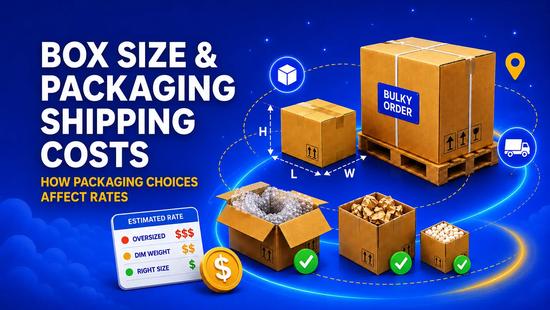
Bulky ecommerce orders expose every weak point in a shipping setup. A product can have a reasonable unit weight and still become expensive to ship once it is packed in a large carton. Carrier pricing looks at the space a package occupies, the handling it requires, the service selected, and the destination. Packaging choices influence each of those inputs.
For brands that sell furniture, home goods, fitness products, equipment, appliances, building supplies, and oversized accessories, packaging is a cost-control decision. The right carton can protect the product and keep the shipment on a better service path. The wrong carton can increase the billable weight, trigger handling charges, push the order into freight, or create delivery issues that surface after the label is created.
Shipduo helps ecommerce teams connect product data, package rules, rate comparisons, labels, freight booking, and tracking, so bulky orders are rated and shipped with greater control.
Why Packaging Decisions Change Shipping Rates
Shipping rates are not based on product weight alone. Carriers also evaluate package dimensions, distance, service level, address type, and handling requirements. For bulky orders, package size often has the greatest impact because the carton occupies more space in a truck, van, aircraft, or sorting network.
A larger box can raise cost even when the product itself is light. Added void fill can increase outer dimensions. Extra protection can improve damage prevention, but it can also move the package into a higher billable weight or a surcharge category. Strong packaging should protect the product while keeping the outer carton as efficient as possible.
The packaging decision also affects the carrier options available for the order. A shipment that fits parcel rules can move through standard parcel services. An oversized or palletized order may need less-than-truckload (LTL) freight, a bill of lading, liftgate planning, or appointment delivery. Those decisions should be made before checkout and fulfillment, not after the warehouse discovers the packaged size.
How Box Size Affects Shipping Cost
Box size affects shipping cost through dimensional weight, carrier size limits, handling rules, and service eligibility. Carriers need to price for both weight and space because a large lightweight package still consumes network capacity.
Dimensional weight converts package volume into a billable weight. The carrier compares that figure with the actual scale weight and usually charges based on the higher value. A carton with too much empty space can therefore result in a shipping rate that feels disproportionate to the product’s physical weight.
Box length, width, and height also influence surcharge exposure. Large-package handling, additional handling, oversize rules, and nonstandard package charges vary by carrier and service. A small increase in one dimension can move a shipment into a different pricing category.
For ecommerce teams, the goal is to match the product to packaging that protects it, supports the selected carrier service, and avoids unnecessary volume.
How Packaging Affects Shipping Cost Beyond Dimensions
Packaging affects shipping costs through material, shape, protection level, labor, damage risk, and carrier acceptance. A carton that is too weak can lead to damage, returns, replacement shipments, and customer support work. Overbuilt packaging can raise material cost, fulfillment time, and billable weight.
Bulky products often require inner protection because the outer carton may be subject to conveyor movement, stacking pressure, freight handling, or residential delivery conditions. Corner protection, molded inserts, pads, foam, straps, or double-wall corrugate can all play a role. The decision should come from product risk, not from a generic packaging habit.
Irregular shapes also need attention. Carriers measure the outermost length, width, and height, so uneven packaging can create a larger rated size than expected. Freight shipments may need pallet stability, stackability, and clear handling points. Good packaging keeps the product secure while giving the carrier a clean unit to move.
Packaging Choices for Bulky Orders
Packaging choices for bulky orders should start with product data. Product length, width, height, weight, fragility, replacement cost, and destination mix should guide the carton and service path. Bulky ecommerce products rarely fit a single packaging rule across the entire catalog.
A stronger packaging program uses carton groups instead of one oversized default box. Each group should reflect common product dimensions and protection needs. That structure helps fulfillment teams pick a better carton faster and gives rate logic more reliable package data.
For large products, packaging review should include four questions before the order reaches the carrier:
- Does the packed carton create unnecessary dimensional weight?
- Does the product need parcel handling, freight handling, or pallet protection?
- Does the box design reduce movement inside the carton?
- Does the shipment data match the final packed dimensions and weight?
Those questions keep cost, protection, and carrier fit in the same decision.
Dimensional Weight and Billable Weight Need Accurate Package Data
Billable weight depends on the carrier’s pricing rules and the shipment’s package data. Actual weight comes from a scale. Dimensional weight comes from length, width, and height. When package data is incorrect, the quoted rate may be incorrect as well.
This is a common source of margin loss for bulky orders. The store may quote a rate using product weight, while the carrier charges based on packed dimensions. The difference becomes apparent later through invoice adjustments, surcharge reports, or higher-than-expected fulfillment costs.
Accurate package data should be maintained at the product and packaging-rule level. For repeat shipments, teams should avoid recreating dimensions manually during packing. The data should flow into checkout rates, label creation, carrier comparison, and shipment records.
When Packaging Turns a Parcel Order Into Freight
Packaging can push an order past parcel service limits. The product may be heavy, oversized, fragile, packed in multiple cartons, or safer to move on a pallet. At that point, parcel shipping may create more cost and risk than a freight option.
Shipduo helps teams route these orders with the right shipping method. When the packaging plan pushes an order beyond parcel limits, Shipduo can help teams transition to LTL shipping for large products, with rating, booking, documentation, and tracking connected to the order.
This connection is useful for bulky product categories because the fulfillment team does not need to treat freight as a separate manual process. Parcel and freight decisions can stay closer to the same order record, which gives support better visibility into the order after pickup.
Checkout Rates Need the Packaged Shipment Profile
Checkout accuracy depends on the shipment profile used to calculate the rate. Product weight alone is rarely enough for bulky ecommerce orders. The rate should reflect the packed dimensions, packaging rules, delivery address, carrier service, and freight eligibility.
Shipduo helps teams show accurate shipping rates at checkout by connecting shipping logic to order and package data. This gives customers clearer delivery costs before purchase and helps brands reduce undercharging on large or awkward shipments.
The biggest improvement usually comes from maintaining realistic packaging rules. A checkout rate based on an ideal carton that the warehouse never uses will not protect margin. The rate logic should reflect the actual way the product ships.
Carrier Selection and UPS Package Data
Different carriers evaluate package data and service rules differently. For bulky orders, carrier choice should account for size limits, dimensional weight, surcharge risk, delivery speed, address type, tracking needs, and total landed shipping cost.
Shipduo’s UPS shipping integration helps teams access UPS parcel rates, labels, service options, returns, and tracking from a single dashboard. For bulky orders that remain parcel-eligible, keeping dimensions and service selection connected to the order helps teams compare options and reduce manual checks.
Carrier comparison is especially useful when orders are close to a service threshold. One carrier may be more suitable for a specific size, destination, or delivery speed. A connected workflow gives the team a faster way to evaluate those options.
Bulky Ecommerce Shipping Workflows Need Packaging Rules
Bulky ecommerce shipping workflows need packaging rules that connect the product catalog to fulfillment and rate calculation. Without that connection, teams often quote one shipment profile and pack another.
Shipduo supports bulky ecommerce shipping workflows by keeping package data, carrier rates, labels, freight options, and tracking connected to the order. That structure helps teams handle large cartons, multi-box orders, freight-ready shipments, and customer delivery questions with better context.
Packaging rules also improve reporting. When shipping cost rises, the team can review package dimensions, carrier selection, address type, surcharge categories, and product group performance. That makes cost problems easier to trace than a general shipping-spend report.
A Practical Packaging Review for Bulky Products
A packaging review should connect warehouse reality with rate logic. Start with the products that create the largest shipping cost variance, the most carrier adjustments, or the highest damage rate. Those products usually reveal where box size, protection level, and carrier service need closer attention.
Review the actual packed dimensions against those stored in the shipping workflow. Compare the expected billable weight against the carrier's charges. Check surcharge patterns by carrier and product group. Look at damage claims, returns, and replacement orders tied to the same product families.
The packaging review should remove wasted space, weak data, and avoidable carrier charges while keeping the product protected. A strong package should serve the customer, the carrier, the warehouse, and the margin.
Use Packaging Data to Control Shipping Cost
Box size and packaging choices shape shipping cost long before the label is printed. For bulky ecommerce orders, the wrong carton can raise dimensional weight, limit carrier options, increase handling charges, or push a shipment into the wrong service path.
Shipduo helps ecommerce teams manage that complexity by connecting package data, real-time rates, parcel and freight options, labels, documents, and tracking. When the workflow uses the packed shipment profile from the start, brands can quote with greater confidence, select better carrier services, and provide customers with clearer delivery information.
A stronger packaging process turns box selection into an operational advantage. The team protects the product, controls avoidable costs, and keeps bulky orders moving through the right shipping path.